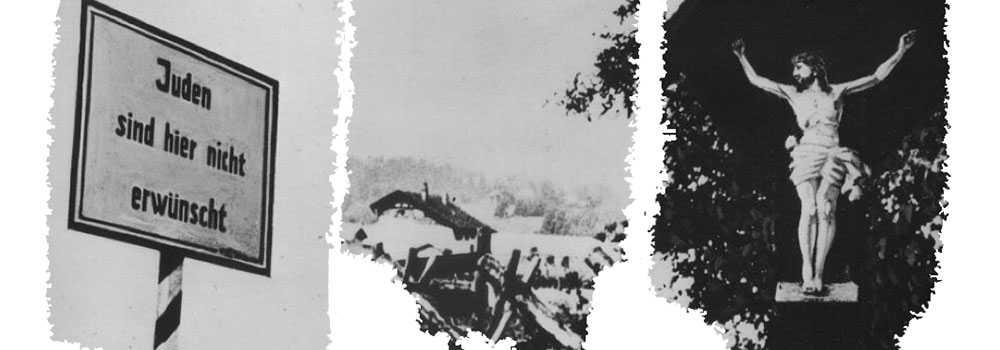
As a distinct minority group, Jews have been subjected to persecution and discrimination in different contexts throughout history. In the ancient world, including in the Egyptian, Babylonian, Greek and Roman Empires, Jewish communities were marginalised and scapegoated for their religious difference and cultural distinctiveness. (1) With the rise of Christianity as the dominant religion of the Roman Empire, antisemitism became increasingly religious in character. Though Jesus and his earliest followers were Jewish, early Church Fathers developed narratives that portrayed Jews as Christ-killers and enemies of the Christian faith. (2)
In medieval Europe, the heart of Christendom, antisemitism intensified. Barred from most professions and guilds, many Jews became financiers and tax collectors – professions seen as sinful for Christians. Combined with persistent religious hostility, this made Jews deeply unpopular. Periods of religious fervour, economic decline and political instability frequently triggered outbreaks of anti-Jewish violence. From the twelfth century, accusations of ritual murder and other blood libels resulted in the torture and massacre of Jewish communities across Europe. from the thirteenth century, Jews faced forced conversions, widespread violence and expulsions across central and western Europe. Jews were also, at various times and in different regions, required by the Church to wear distinctive hats or badges that marked their inferior status in public. From the sixteenth century, particularly in Italian and German-speaking towns, Jewish communities were forcibly segregated into confined areas known as ghettos. By the end of the medieval period, Jewish life had been largely eradicated from much of central and western Europe.
Meanwhile, in the Islamic world, Muslim-majority societies sometimes provided relative refuge for Jews fleeing medieval Christian persecution. Jews nonetheless occupied a subordinate legal and social position. Designated dhimmis, or second-class citizens, they were required to pay an annual tax (jizya), faced restrictions on public life, and were at times made to wear badges marking their inferior status, a practice originating in the Umayyad Caliphate in the eighth century. Jewish communities also experienced episodes of violence, including pogroms. Jewish life under Muslim rule was never as bad as the worst of Christendom, but never as good as the best of Christendom. (3)
New Enlightenment ideas about citizenship and civil rights in the eighteenth and nineteenth centuries brought Jewish emancipation across much of Europe. As Jews integrated into wider national societies and rose to prominence in fields like business, law and academia, antisemitism evolved into more racialised forms. Jews were seen as inherently alien, disloyal and incapable of full national belonging. At the same time, Jews were accused of being socialists, communists or revolutionaries by those on the political right, and greedy capitalists exploiting the poor by those on the left. In Eastern Europe, where political instability was widespread, Jews also faced discriminatory laws and violent pogroms into the twentieth century, particularly within the Russian Empire and during successive revolutions.
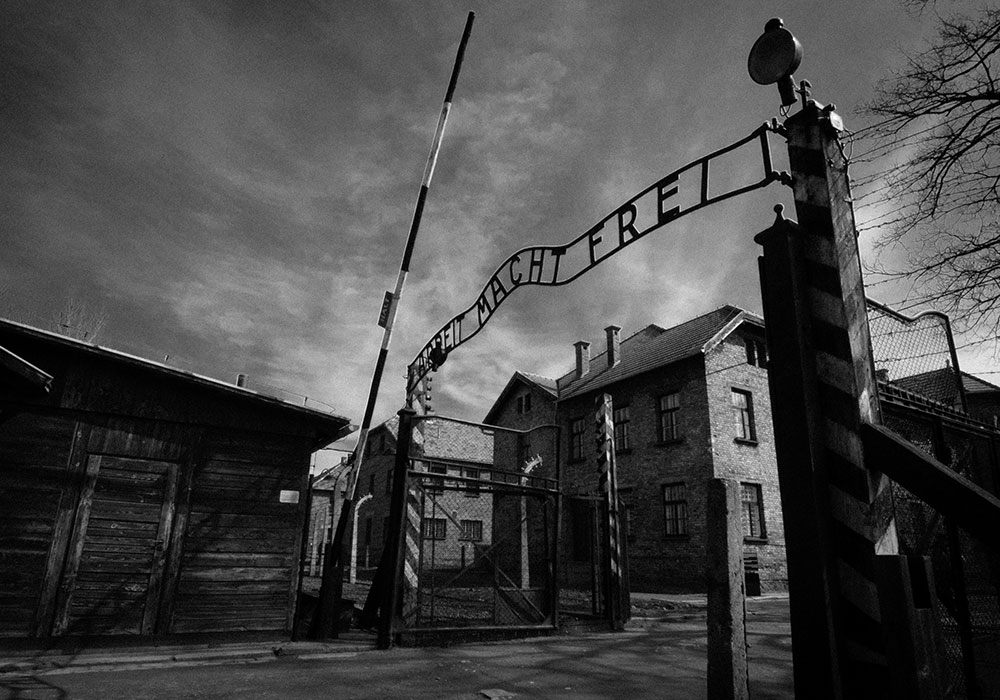
State-sanctioned antisemitism reached its most extreme and catastrophic form in the Holocaust, the systematic murder of 6 million Jewish men, women and children by Nazi Germany and its collaborators between 1941 and 1945. At the same time, antisemitic prejudice in other countries contributed to restrictive immigration policies that left many Jews trapped in Nazi-occupied Europe. Elsewhere, ties between the Arab world and Nazi Germany further inflamed antisemitic hatred therein, with resulting violence and pogroms.
Antisemitic violence continued after the Holocaust. Survivors returning home often faced hostility from non-Jewish neighbours and hundreds were killed in postwar pogroms across Europe. Around the creation of the State of Israel in 1948, intensifying antisemitic persecution across the Middle East led to the expulsion of approximately 850,000 Jews from countries where they had lived for centuries. (4) In parallel, anti-Zionist forms of antisemitism gained prominence, particularly in the Soviet Union, where Jews were accused of secretly working against the USSR and subjected to discriminatory measures. By the twenty-first century, anti-Zionism had become a central component of antisemitic prejudice and discrimination in many parts of the world.
The resources below examine aspects of the global history of antisemitism.
- Isaac, B. (2010) ‘The Ancient Mediterranean and the Pre-Christian Era’, in Lindemann, A.S. and Levy, R.S. (eds.) Antisemitism: a history. Oxford: Oxford University Press, pp. 35–77.
- Cunningham, P.A. (2010) ‘Jews and Christians from the time of Christ to Constantine’s Reign’, in Lindemann, A.S. and Levy, R.S. (eds.) Antisemitism: a history. Oxford: Oxford University Press, pp. 47-62
- Lewis, B. (1997) Semites & anti-Semites. London: Weidenfeld & Nicolson
- Gilbert, M. (2011) In Ishmael’s house: a history of Jews in Muslim lands. New Haven, CT: Yale University Press